Are LED Lights Really Harmful, or Have We Been Overlooking the Importance of Wavelength?
We aren’t making any claims in this article; we are simply sharing research.
Introduction
In September 2026, the New York Post published an eye-catching article titled, “Neuroscientist warns common household item is a 'public health emergency’ on the same level as asbestos.” The household item in question? LED lighting. With LED lights illuminating everything from our homes and workplaces to schools, hospitals, and public spaces, the suggestion that this widely used technology could pose a serious health concern raises some important questions. But are all LED lights created equal? Could their potential health effects depend on the specific wavelengths they emit, their intensity, or how long we're exposed to them? Before drawing conclusions, it's important to examine what scientific research actually tells us about LED lighting and its potential effects on human health. Are LED lights really harmful? (1)
LED lighting has become an increasingly common feature in American households. According to the U.S. Energy Information Administration's (EIA) Residential Energy Consumption Survey, 90% of U.S. households reported using LED bulbs in 2024. That's a significant shift from 2015, when only 4% of households relied primarily on LED bulbs for indoor lighting, compared with 63% by 2024 (2). For additional perspective, in 2020, 54% of households earning $100,000 or more annually reported using mostly LED lighting (3). With LED technology now illuminating the vast majority of American homes, understanding its potential effects on human health has become more relevant than ever.
But what if the concern surrounding modern LED lighting isn't simply about the wavelengths we're exposed to, but also the wavelengths we're no longer receiving? In an interview with The European, University College London neuroscientist Professor Glen Jeffery and former European Space Agency scientist Dr. Bob Fosbury raised concerns about what they describe as “infrared darkness,” suggesting that modern LED lighting may leave us with reduced exposure to certain wavelengths that could play an important role in mitochondrial function. The researchers argue that this shift in our everyday lighting environment deserves serious attention, even describing it as a potential public health emergency (4).
As researchers noted in a 2026 study published in Scientific Reports, “Life evolved under broad spectrum sunlight, from ultraviolet to infrared (300–2500nm). This spectrally balanced light sculpted life’s physiology and metabolism” (5). Unlike natural sunlight, many conventional white LED lights emit a more limited range of wavelengths. Research into photobiomodulation suggests that certain red and near-infrared wavelengths can influence cellular processes, including mitochondrial function. However, whether these wavelengths can counteract potentially adverse effects associated with blue-light exposure remains uncertain. This leads us to the central question we'll explore throughout this article: Are blue-dominant LED lights potentially harmful to our health, and could incorporating longer red and near-infrared wavelengths into our lighting environments make a meaningful difference?
What Are LED's?
LED stands for Light-Emitting Diode, a semiconductor device that produces light when an electric current passes through it. According to the European Commission's Scientific Committee on Health, Environmental and Emerging Risks (SCHEER), LED's can be designed to emit different wavelengths of light, ranging from ultraviolet to infrared. Today, LED technology is found almost everywhere, including household lighting, streetlights, vehicle headlights, traffic signals, televisions, smartphones, computer screens, and even remote controls (6).
But why did we transition from traditional incandescent lighting to LED's in the first place? The answer largely comes down to energy efficiency, cost, and longevity. Unlike incandescent bulbs, which produce light by heating a filament, LED's generate light through a semiconductor, allowing them to produce comparable illumination while consuming considerably less electricity. For example, a 10-watt LED bulb can produce approximately the same amount of light as a traditional 60-watt incandescent bulb. LED bulbs also generally last significantly longer, reducing replacement costs. The development of efficient blue LED's was so important to modern lighting that it earned the 2014 Nobel Prize in Physics, making practical, energy-efficient white LED lighting possible (4).
However, energy efficiency isn't the only difference between LED's and traditional lighting. Many conventional white LED's produce a prominent peak in shorter blue wavelengths, often around 450nm, alongside other visible wavelengths. Incandescent bulbs, by comparison, produce a broader, more continuous spectrum that extends into the infrared range (5). While LED's have brought undeniable advantages in energy conservation and affordability, their different spectral composition raises another important question: Are we prioritizing energy efficiency without fully understanding how the wavelengths emitted by modern lighting may influence our biology?
To explore that question, we first need to understand what wavelengths are and how different types of light interact with the human body.
Understanding the Electromagnetic Spectrum
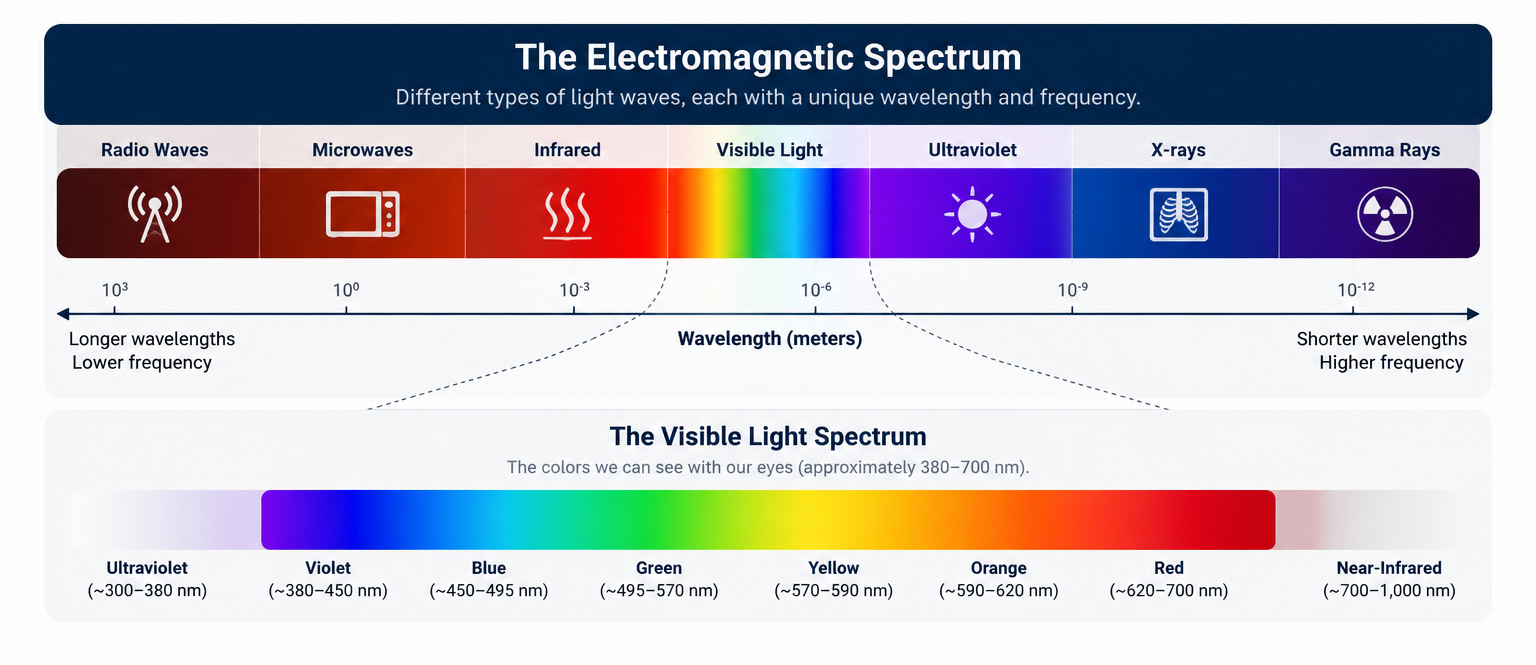
The world around us is filled with different forms of electromagnetic radiation, many of which we encounter every day without even realizing it. Together, these forms of energy make up what scientists call the electromagnetic spectrum. Visible light represents only a small portion of this enormous spectrum and includes the familiar colors of the rainbow, from violet and blue to green, yellow, orange, and red. Beyond the visible spectrum are wavelengths our eyes cannot detect. Infrared radiation has longer wavelengths than visible red light and is commonly associated with thermal radiation, while ultraviolet radiation has shorter wavelengths than visible violet light and can cause sunburn with excessive exposure. Understanding how wavelengths differ is an important first step toward exploring how various types of LED lighting may interact with the human body.
Different wavelengths can produce very different biological effects. Blue light has been studied for its potential role in treating skin conditions such as acne, atopic dermatitis, and psoriasis (7), while green light has been investigated for possible effects on metabolism and fat loss (8). Longer wavelengths, particularly red and near-infrared light, have also attracted scientific interest for their ability to penetrate biological tissues and influence cellular processes, including mitochondrial function (9).
Ultraviolet (UV) light provides another example of how different wavelengths can have both beneficial and harmful effects. UV radiation is divided into three categories: UVA (315–400nm), UVB (280–315nm),and UVC (100–280nm). UVA penetrates more deeply into the skin and contributes to premature aging and skin damage, while UVB plays an important role in vitamin D production but can also cause sunburn and increase skin cancer risk. UVC, although largely blocked by Earth's atmosphere, can be used in controlled settings to inactivate bacteria, viruses, and other pathogens. Interestingly, research suggests that sunlight may offer benefits beyond vitamin D production, including potential cardiovascular effects through nitric oxide released from the skin (10). A systematic review has also explored associations between sunlight exposure and type 2 diabetes-related outcomes (10, 11). These findings highlight an important distinction: the biological effects of light depend on its wavelength, intensity, and duration of exposure, meaning the same portion of the spectrum may offer benefits under certain conditions while posing risks under others.
Red Light, Mitochondria, and Cellular Energy
Red light has attracted considerable scientific interest for its potential influence on mitochondrial function and cellular energy production. In one study, exposure to 670nm red light increased adenosinetriphosphate (ATP) production in the retina, cortex, and thalamus of mice (12). Another study involving eight-month-old mice with a mitochondrial deficit reported an approximately 50% increase in ATP following red-light exposure (13). Because mitochondria produce much of the energy our cells need to function, understanding their relationship with light is an important part of this discussion. For a deeper look at this process, explore our blog, The Influence of Red Light Therapy on Mitochondrial Function.
But the potential effects may extend beyond cellular energy production. As researchers noted, “Increased mitochondrial performance is associated with increased lifespan and enhanced mobility” (15). Research involving bees and humans has also investigated whether specific red-light exposures influence glucose regulation and oxygen consumption (16, 17). Additionally, a 2016 study found that 670nm red light helped improve ATP-related function, mobility, and survival in bumblebees exposed to neonicotinoid pesticides (18).
Although findings from animal studies cannot automatically be applied to humans, they demonstrate why researchers are interested in the biological effects of specific wavelengths. Light isn't simply something that allows us to see our surroundings. Under certain conditions, it may also influence processes occurring within our cells.
Exploring LED Wavelengths and Their Everyday Applications
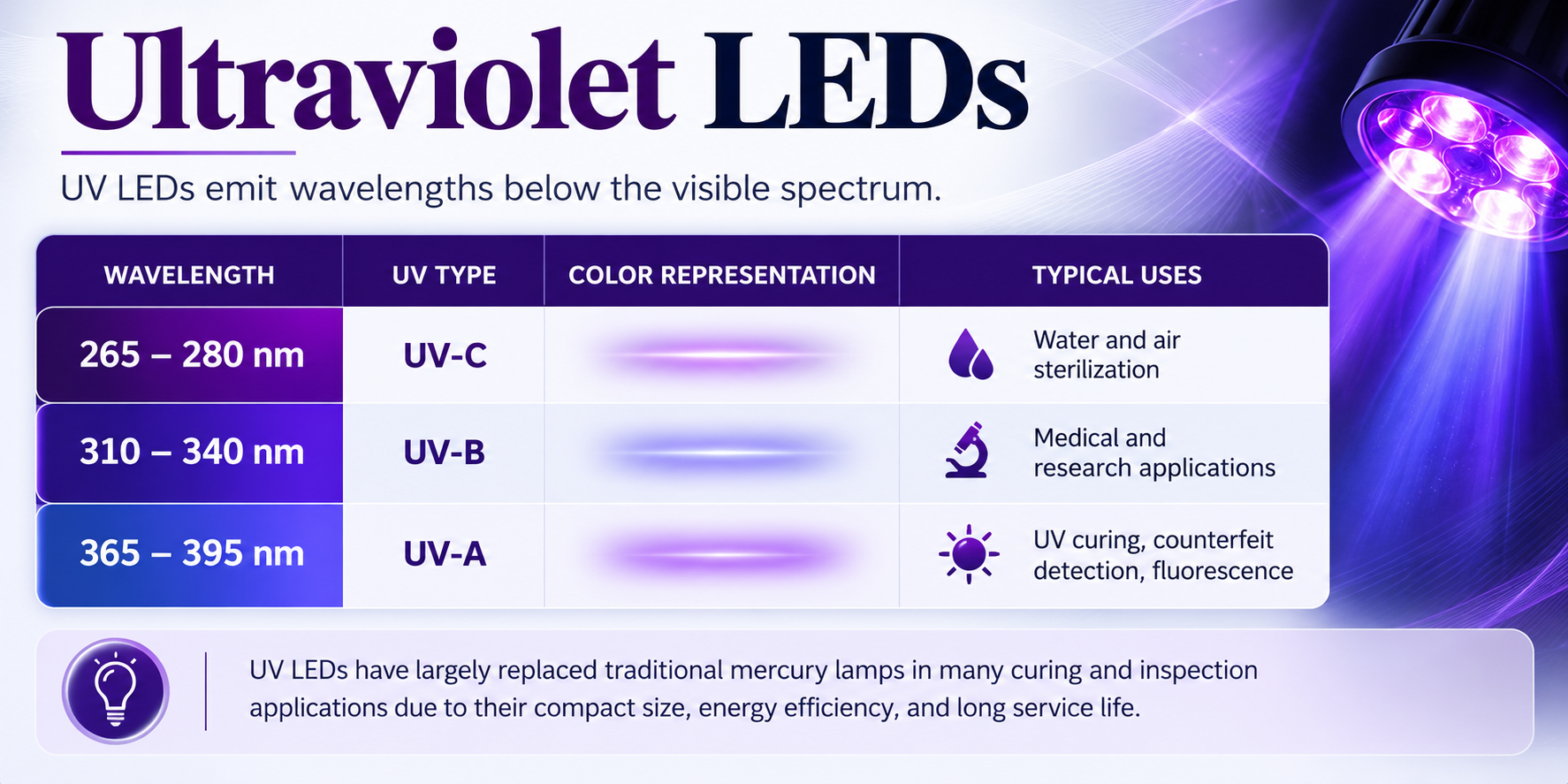
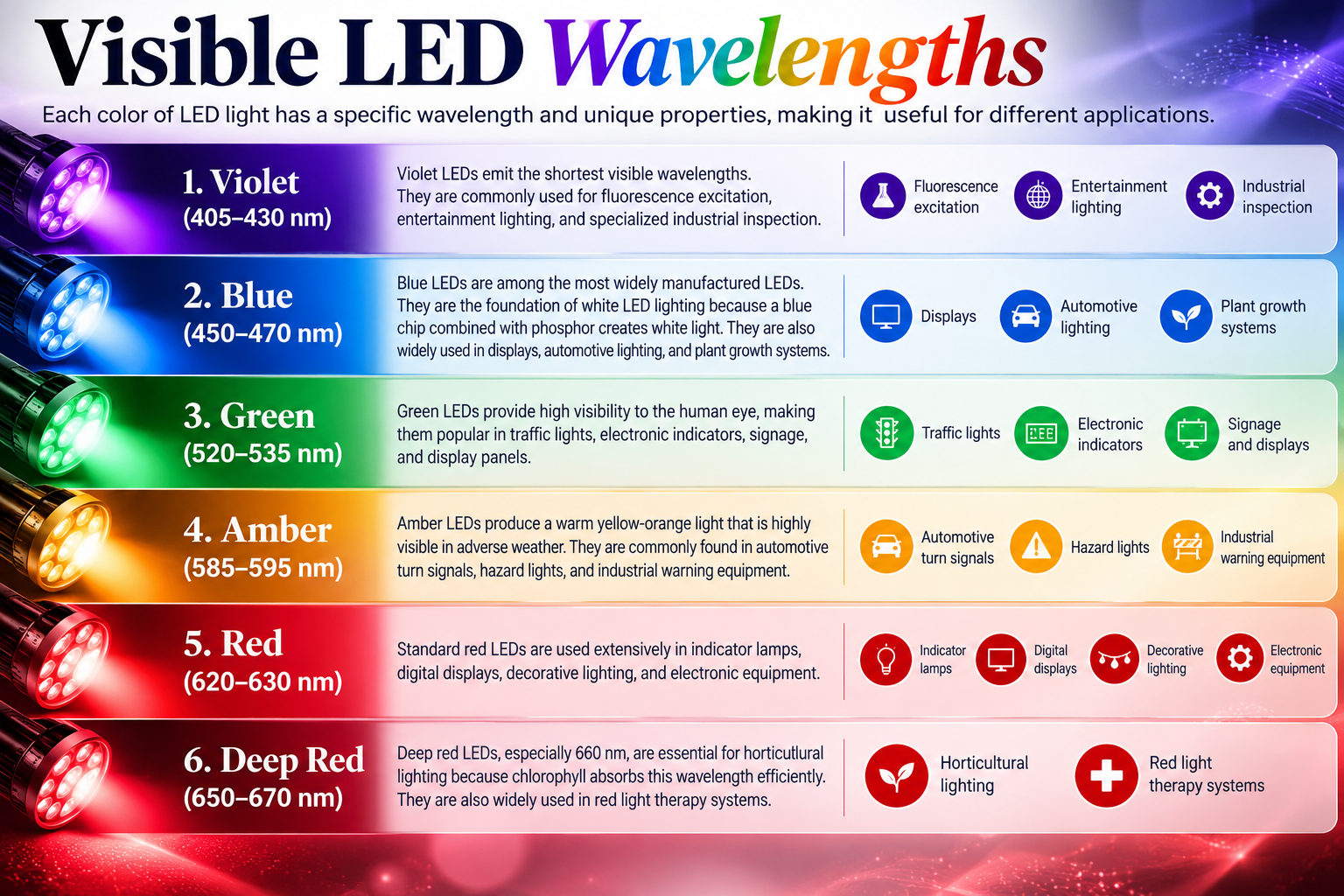
With so many LED wavelengths available, choosing the right one largely depends on its intended purpose. Different wavelengths have properties that make them suitable for specific applications. For example, ultraviolet LED's emitting 265–280nm are used in disinfection applications, while 365–395nm wavelengths are useful for UV curing and inspection. Blue LED's around 450–470nm are frequently used in displays and white lighting, while green wavelengths (520–535nm) are popular in signage and indicators. Amber LEDs (585–595nm) are commonly found in automotive warning lights, while red wavelengths (620–630nm) are used in indicators and signaling.
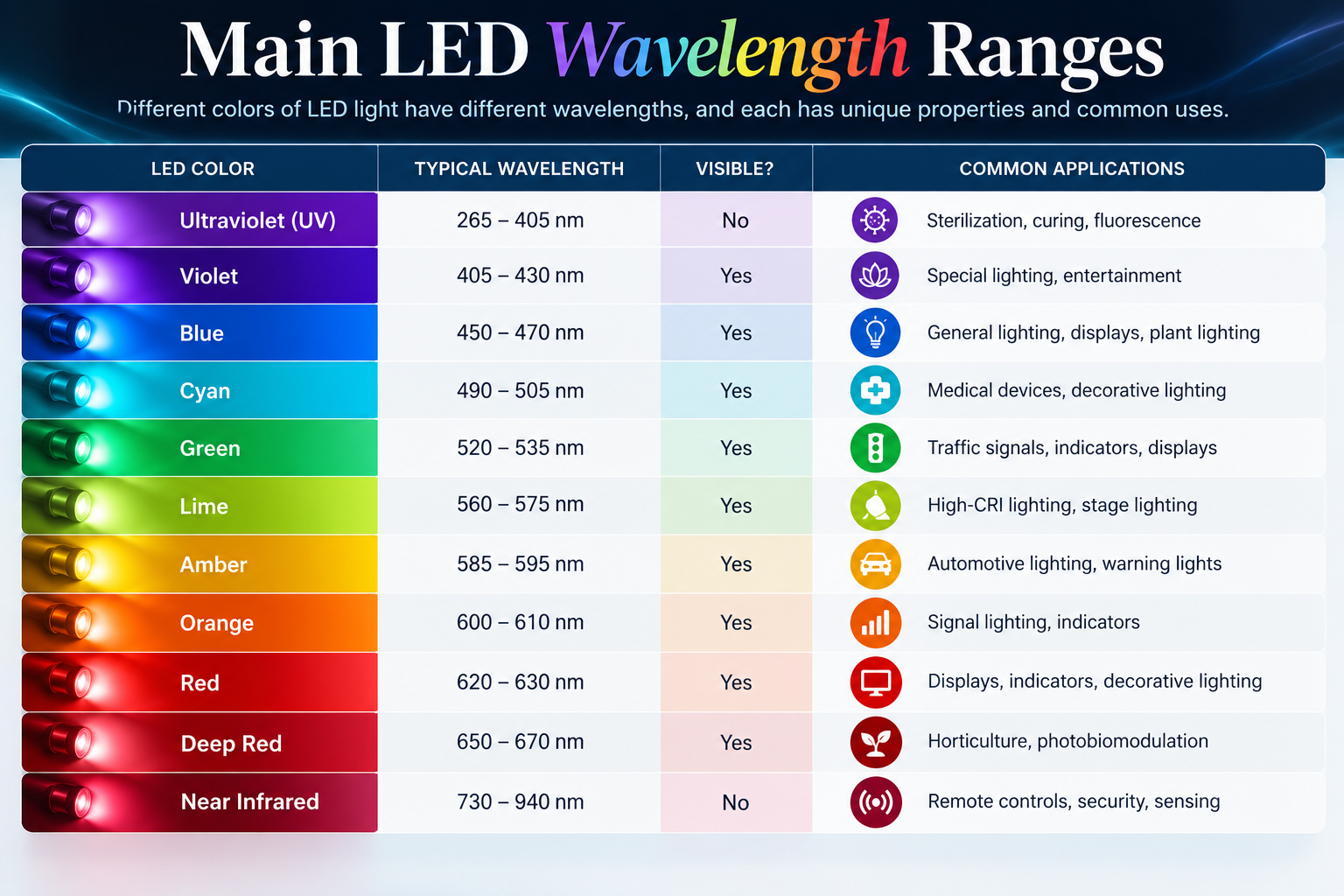
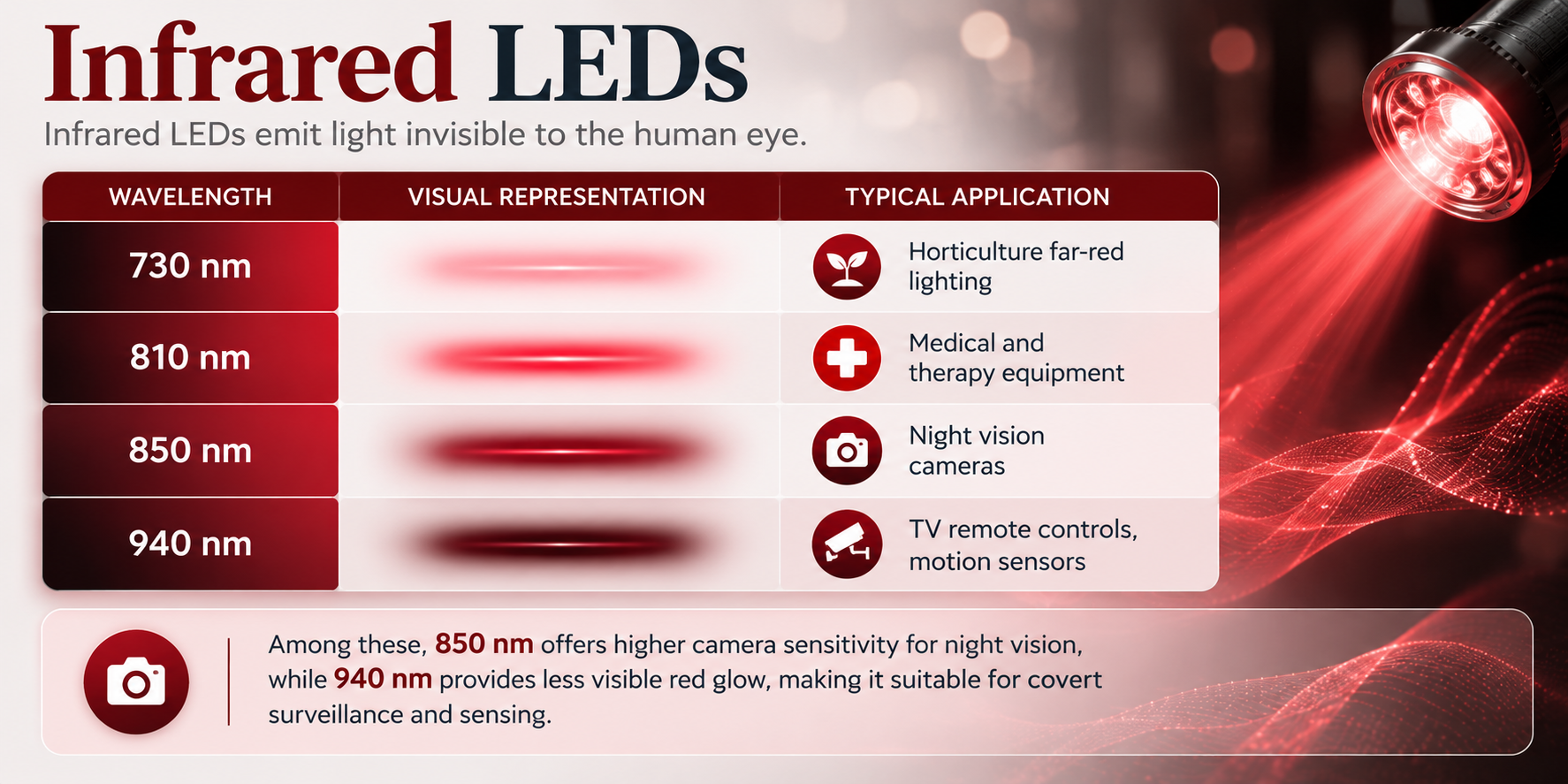
Deep red light at 660nm is frequently investigated in horticulture and photobiomodulation research, while approximately 730nm light is used in plant-growth applications. Near-infrared wavelengths such as 810nm are being studied for applications involving deeper biological tissues, including the brain, while 850nm and 940nm are commonly used in night-vision systems, remote controls, and sensors.
Ultimately, there is no single ideal LED wavelength for every application. The wavelength that makes a light source useful for one purpose may not be appropriate for another. And while different wavelengths offer practical applications and potential biological benefits, it's equally important to examine the other side of the spectrum: Could certain wavelengths also pose risks to our health?
The Other Side of Light: Understanding the Potential Risks of Different Wavelengths
Despite the widespread adoption of LED lighting, questions remain about whether certain wavelengths could negatively affect human health. The European Commission's Scientific Committee on Health, Environmental and Emerging Risks (SCHEER) examined this issue in its report, Are LED Lights Safe for Human Health? Researchers identified potential concerns associated with specific wavelengths and exposure conditions while not deeming those concerns an immediate threat to our health. Blue light, in particular, has attracted scientific attention. Research has raised concerns about the potential biological effects of blue-light wavelengths, including findings suggesting impaired mitochondrial function and reduced human visual performance (5, 19).
Other studies have reported increased blood glucose levels, alterations in activity, metabolism, and liver function (20), as well as reduced mobility, increased weight gain, and changes in serum cytokines, which are signaling proteins involved in regulating immune and inflammatory responses (21, 22).
In addition, Nash et al. revealed,
“Shorter wavelengths in similar ranges are also associated with reduced lifespan.” (23)
Concerns surrounding LED lighting aren't limited to scientific research. They've also emerged in communities experiencing changes to their everyday lighting environments. According to a May 14, 2016, article published by the New York Post, New York City began replacing some newly installed LED streetlights following complaints from residents who described the lighting as excessively bright. Approximately 150 complaints were reportedly received, while more than 500 people signed a petition calling for better-shielded fixtures and reduced blue-rich light emissions. One frustrated resident reportedly commented, “I can’t sleep anymore!! Light is shining directly into my bedroom!!” Although these complaints do not establish that LED lighting is inherently harmful, they highlight how brightness, light direction, and spectral composition can affect people's experiences with artificial lighting (24).
These findings suggest that evaluating the safety of LED lighting requires more than identifying whether a light source uses LED technology. We must also consider which wavelengths it emits, how intense they are, and the conditions under which exposure occurs.
Finding the Balance: Can One Wavelength Counteract the Effects of Another?
But if some wavelengths can produce potentially harmful effects while others may offer benefits, what happens when we combine them? Could adding longer red and near-infrared wavelengths to blue-dominant LED lighting help counteract some of its potentially adverse biological effects? Or could exposure to a broader balance of wavelengths throughout the day provide benefits of its own?
A 2026 study published in Scientific Reports explored the importance of spectral composition in artificial lighting, raising concerns that the dominance of shorter wavelengths and absence of longer wavelengths in conventional LED's may influence mitochondrial function (5). Dr. Bob Fosbury expressed a similar concern in an interview with The European, suggesting that reduced exposure to infrared light in modern indoor environments may compromise mitochondrial efficiency over time. While blue light often receives the blame, Fosbury argues that the absence of longer wavelengths, a condition he describes as “infrared darkness,” may also deserve attention (4).
What About Natural Light?
If different wavelengths can influence our biology in different ways, could natural sunlight offer benefits that conventional artificial lighting may lack? Unlike many LED light sources, sunlight provides a broad spectrum that includes visible red and near-infrared wavelengths. Research suggests that individuals who spend more time outdoors in natural sunlight may experience better health outcomes, including lower rates of cardiovascular disease and potentially reduced risks of certain cancers and type 2 diabetes (10, 11).
These findings raise questions about whether regular exposure to natural light cold help address some of the spectral differences between outdoor and indoor environments.
In a 2022 study by Fabian-Xosé Fernandez where he discusses the beneficial role of daylight exposure on worker productivity and school performance, he states:
“Placed in as complete of a health context as possible, it becomes obvious that daylight is rooted in our biology. Our external organs assume its daily presence, and a person’s physical and cognitive potential may depend on it.” (25)
Could spending 10–15 minutes outdoors in the morning provide meaningful biological benefits? Although natural daylight is important for regulating circadian rhythms, further research is needed to determine whether brief sunlight exposure can counteract the effects of blue-dominant artificial lighting.
What Does Research on Human Vision Tell Us?
The retina is one of the most metabolically active tissues in the human body and contains a high concentration of mitochondria to meet its substantial energy demands (26). As we age, mitochondrial function and retinal metabolism can decline, potentially contributing to changes in visual performance. Researchers have investigated whether exposure to longer wavelengths may help improve aspects of age-related retinal function (27, 28).
In a 2021 human study, Shinhmar et al. found that a single three-minute morning exposure to 670nm red light improved color contrast sensitivity, with benefits lasting approximately five days (29). Although this study used a specific red-light source rather than natural sunlight, its findings raise interesting questions about the potential importance of longer wavelengths in our daily environment.
This leads to an intriguing question: If targeted exposure to a single red-light wavelength can produce measurable visual improvements, what happens when researchers supplement an entire LED-lit environment with a broader spectrum of light?
What Happened When Researchers Added Broad-Spectrum Light to an LED-Lit Workplace?
In January 2026, Edward Barrett and Glen Jeffery published a study in Scientific Reports investigating whether supplementing conventional LED lighting with broader-spectrum incandescent light could improve human visual performance. The experiment involved 22 healthy adults between the ages of 23 and 65 working in predominantly LED-lit environments with limited natural daylight exposure. Eleven participants continued working under standard LED lighting, while the other eleven had their workspaces supplemented with 60-watt incandescent lamps for two weeks. Unlike the existing LED's, which produced a prominent spectral peak around 450nm, the incandescent bulbs provided a broader spectrum extending into the infrared range (5).
The results were particularly interesting. Participants exposed to supplemental incandescent lighting demonstrated approximately 25% improvements in both protan and tritan color contrast sensitivity, while the LED-only control group did not experience comparable improvements. Even more remarkably, these improvements remained evident four and six weeks after the incandescentl ighting was removed. This contrasts with earlier research involving a single three-minute exposure to 670nm red light, where improvements generally lasted approximately five days (29).
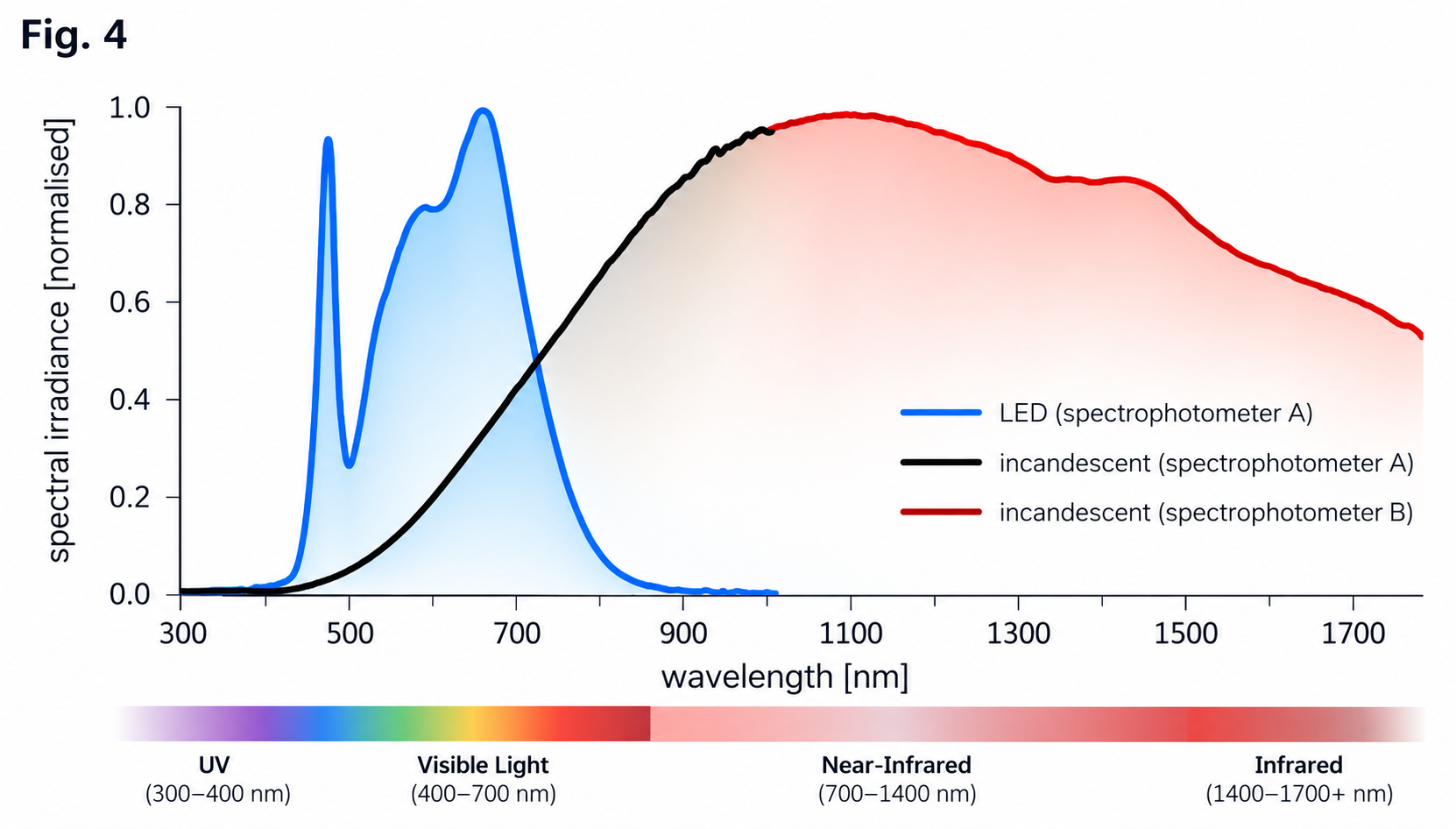
The graph above illustrates a key difference between the LED lighting used in the workplace and the supplemental incandescent lighting introduced by researchers. The blue curve represents the building's standard LED lighting, which emitted wavelengths ranging from approximately 350 to 720nm, with a prominent peak around 450nm in the blue-light range. Notably, this lighting provided virtually no infrared wavelengths, and because the workspaces received no natural daylight, participants had little to no exposure to infrared light during their time in the building. In contrast, the black and red curves represent the broader spectrum produced by a standard 60-watt incandescent lamp, extending from approximately 350nm to beyond 2,000 nm, including a substantial range of longer red and infrared wavelengths. Two spectrometers were used to measure the incandescent spectrum, which explains why its curve appears in two colors. This comparison highlights an important distinction: while both light sources provide visible illumination, their spectral compositions are considerably different.
The researchers suggested that the broader spectrum, particularly its longer wavelengths, may have influenced mitochondrial functionand contributed to the sustained improvements in visual performance.
In discussing their findings, the researchers emphasize that living organisms evolved under the broad spectrum of natural sunlight and that light can influence mitochondrial function, a relationship that has become common knowledge. When shorter wavelength exposure is dominant, as in LED lighting, mitochondrial function declines (30, 31).
Consistent with the mitochondrial theory of aging, researchers also discuss how impaired mitochondrial function may contribute to increased cellular and organismal aging and death (32). One proposed mechanism involves 420–450nm blue light being absorbed by porphyrins, potentially contributing to the production of singlet oxygen, oxidative stress, and inflammation (31).
Conversely, studies involving specific red and near-infrared wavelengths have associated exposure with increased mitochondrial membrane potential, changes in mitochondrial complex proteins, elevated ATP production, reduced inflammatory markers, and extended average lifespan (12, 15, 18, 33).
Researchers argue that their findings highlight the potential damaging influence of LED-dominant lighting on human visual performance, while suggesting that supplementing these environments with longer wavelengths may help restore a more biologically supportive balance of light (5). Although further research is needed to establish the broader health implications, the study raises an important question: Could the absence of longer wavelengths in modern artificial lighting be just as significant as the presence of shorter ones?
LED's Are Everywhere, But Are We Asking the Wrong Question About Their Safety?
With LED lighting now woven into nearly every aspect of modern life, perhaps we've been asking the wrong question all along. Rather than asking whether LED's as a whole are harmful, shouldn't we be investigating which wavelengths, at what doses, and under what conditions may produce beneficial or adverse biological effects? After all, not all LED's emit the same wavelengths, and the research we've explored suggests that different portions of the light spectrum can influence biological processes in different ways. More importantly, emerging evidence raises the possibility that supplementing blue-dominant lighting with longer red and near-infrared wavelengths may help address some potentially unfavorable effects while supporting aspects of cellular function. Although this possibility remains under investigation, it invites us to reconsider how artificial lighting is designed and evaluated.
How Could Exposure to LED's Pose Any Risk?
According to the European Commission's Scientific Committee on Health, Environmental and Emerging Risks (SCHEER), optical radiation emitted by LED's may potentially affect the eyes and skin under certain conditions, depending on several important variables. These include the spectrum of wavelengths emitted, the intensity of the light, particularly within the blue-light range, and the duration of exposure. SCHEER also explains that optical radiation exposure from LED's is generally insignificant compared with exposure to natural outdoor light.
However, throughout our lives, our eyes are continually exposed to varying levels of optical radiation from both natural and artificial sources, each with different wavelengths and intensities. As the committee cautions, “A lifetime of this combined exposure to optical radiation may contribute to degenerative eye diseases, such as age-related macular degeneration” (6).
Other research has similarly raised questions,
“It is concluded that the blue light component of white LED light may cause health problems, and further investigation is required to test commercial brands of white LED's that emit different amounts of blue light” (34).
One final study raises an important question about how long the biological effects of blue-light exposure may persist. In a 2022 study, Kaynezhad et al. examined the retinas of mice exposed to 420nm blue light. Researchers observed significant instability in deoxygenated hemoglobin and oxidized cytochrome-c-oxidase, indicators associated with retinal blood oxygenation and mitochondrial metabolism. Remarkably, these changes remained statistically significant throughout a one-hour recovery period after the blue-light exposure ended (31). This finding is particularly interesting because it suggests that certain physiological responses to blue light may persist beyond the exposure itself.
If longer wavelengths can counteract the effects of the damage from shorter wavelengths, then daily use of devices such as the LZR UltraBright, which uses 660nm and 810nm wavelengths, could potentially help you to mitigate those unfavorable wavelengths you encounter each day. Ultimately, these findings bring us back to the central question of this article: Is the concern really that LED's are harmful, or that our modern lighting environments may lack the balance of wavelengths our bodies have evolved to experience?
Conclusion
We are surrounded by artificial light almost everywhere we go. From our homes and workplaces to hospitals, smartphones, tablets, tanning beds, and LED beauty devices, light-emitting technology has become deeply integrated into modern life. Given how frequently we encounter these light sources, shouldn't we continue investigating how their spectral characteristics may influence our health?
The research we've explored suggests that the question is more complex than whether LED's are simply harmful or beneficial. Certain shorter wavelengths have been associated with unfavorable biological responses, while specific longer wavelengths have demonstrated potentially beneficial effects on mitochondrial function and visual performance. The 2026 study by Barrett and Jeffery adds another important piece to this discussion by showing that supplementing an LED-lit workplace with broader-spectrum incandescent lighting improved color contrast sensitivity, with benefits persisting for weeks after the intervention ended.
But important questions remain. Could the right combination of wavelengths help create artificial lighting that better supports human physiology? Could regular exposure to natural sunlight play a complementary role? And can manufacturers successfully incorporate a broader spectrum of red and near-infrared wavelengths into LED lighting without sacrificing the energy efficiency and affordability that made the technology so widely adopted?
Barrett and Jeffery highlight an important challenge that researchers have yet to fully resolve:
“A solution may be found in creating lighting units with multiple longer wavelength LED's to cover a wider span of the near infrared. However, our attempts here have had limited success. Multiple closely associated spectral peaks do not produce a smooth spectral output as found in incandescent lights and sunlight, which is problematic in improving function and has yet to deliver. This possibly may be overcome using a greater number of spectral peaks with tighter spacing. But this raises a different series of problems regarding cost and increased energy consumption making this solution no better than retention of incandescent sources in terms of environmental sustainability. Key to this issue is the question of how much infrared is needed to sustain improved function?” (5).
Perhaps the question is no longer whether LED's are harmful, but whether finding the right balance of wavelengths could shed new light on a healthier future.