Start Here

Treat from the center of the body toward the periphery. Stimulating the body’s central processes will aid treatments to peripheral areas.

For example, with lymphedema, stimulating the proximal regions of the leg will increase its physiological activity and prepare it for the increased fluids which will flow up the leg from the foot or foreleg.The same is true with manual lymph drainage, it is important to stimulate the proximal leg veins before sending more lymph into them from the foot and ankle.

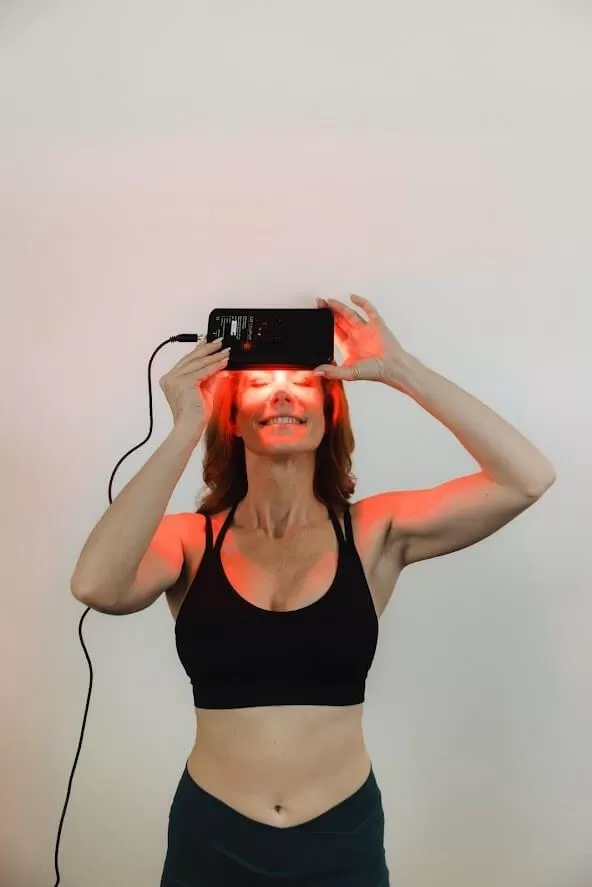
A woman in a black sports bra holds a LZR UltraBright device with a red light on her forehead, smiling against a neutral background.

Calculating the Output of Your LED in Joules

The following is the approximate delivered dose in joules per minute,based on the output power of the LED:

Mw

LED Data

Time

10,000 mW

600 joules

Minute

5000 mW

300 joules

Minute

3000 mW

180 joules

Minute

2000 mW

120 joules

Minute

1000 mW

60 joules

Minute

500 mW

30 joules

Minute

100 mW

6 joules

Minute

10 mW

.6 joules

Minute

Maximum Treatment Time

Your total treatment time will be dependent on the strength of your LED because treatment time is inversely proportional to the LED’s total output power. The maximum recommended dose for the average patient is 100 to 600 joules; with an LED that is 1,000 to 10,000 mW. Although there are exceptions, mentioned in the clinical part of this manual, we will use that maximum dose for the calculations below:

A 10,000 mW LED will produce 600 joules per minute

10 watts x 60 seconds = 600 joules per minute


Maximum treatment time: 5–2 minutes depending on the condition

A 5000 mW LED would produce 300 joules per minute.

5 watts = 60 seconds = 300 joules per minute

Maximum treatment time: 1–3 minutes depending on the condition

A 1000 mW LED would produce approximately 60 joules per minute

1 = 60 seconds = 60 joules per minute

Maximum treatment time: 2–10 minutes depending on the condition

Light Before Heat and After Ice

Your total treatment time will be dependent on the strength of your LED because treatment time is inversely proportional to the LED’s total output power. The maximum recommended dose for the average patient is 100 to 600 joules; with an LED that is 1,000 to 10,000 mW. Although there are exceptions, mentioned in the clinical part of this manual, we will use that maximum dose for the calculations below:

Dark and Light Skin: The 25% Rule

Dark-skinned individuals have more melanin, the brown pigment that blocks out the sun. People from areas farther from the equator have lighter skin and those from the tropics have darker skin.

It has been hypothesized that people who live in dark climates might have developed lighter-colored, more translucent skin, in order to help them absorb more of the sun’s rays and therefore produce adequate amounts of vitamin D. It has been established that darker-skinned people are blessed with greater natural protection from the harmful sun rays and have a lower risk of skin cancer.

If you are striving for deep light penetration, it is important to increase the laser dose for a dark-skinned individual and decrease the dose by the same amount when treating a light-skinned individual. The more extreme the skin color, the more you will need to modify your dose.

Painting Technique

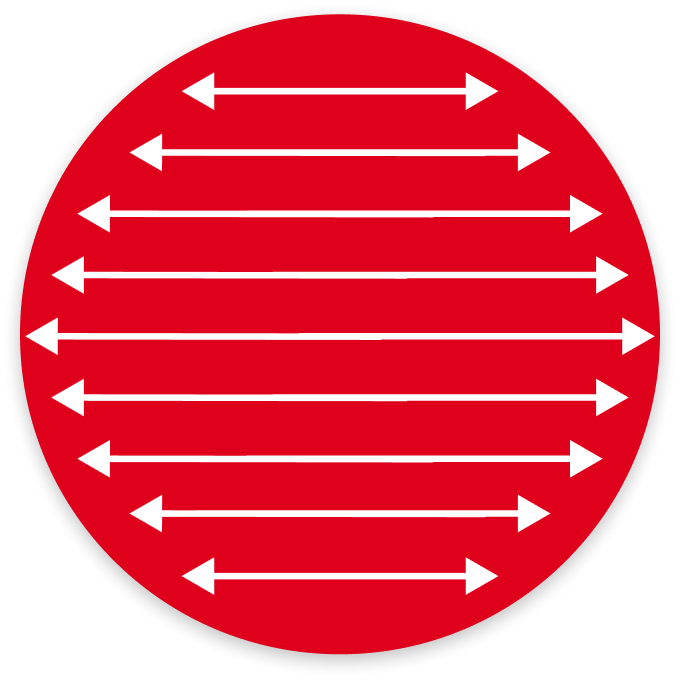
This technique involves moving a cluster of LEDs over the selected area of treatment about half the speed of ultrasound, or about one inch (2.5 centimeters) every 2 seconds. The movement should be steady, to allow for well-distributed photoabsorption.

Red circular graphic featuring horizontal white arrows pointing left and right, evenly spaced across the center.

Nerve Tracing

Nerve tracing is used in cases of neuritis, sciatica, and radiculopathy. It involves palpation along the skin overlying the tract of a peripheral nerve, looking for sore, tender points. Often the tender point is slightly raised, possibly indicating increased muscle tonus. The protocol would be:

Trace the nerve from proximal to distal.

1

Palpate the skin over a nerve looking for tender or swollen points.

2

Palpate the skin over a nerve looking for tender or swollen points.

3

Relaxation Technique

Nerve tracing is used in cases of neuritis, sciatica, and radiculopathy. It involves palpation along the skin overlying the tract of a peripheral nerve, looking for sore, tender points. Often the tender point is slightly raised, possibly indicating increased muscle tonus. The protocol would be:

When the probe is placed against the skin you will feel a certain amount of tissue resistance.

1

As you provide light stimulation you will, at some point, feel the device gently sink into the tissue.

2

This may reflect a relaxation response by the connective tissue.

3

This often means that the patient has received sufficient stimulation to relax tissues and is a sign to stop treatment on that particular point or region.

4

Treatment and Dosage Guidelines

Nerve tracing is used in cases of neuritis, sciatica, and radiculopathy. It involves palpation along the skin overlying the tract of a peripheral nerve, looking for sore, tender points. Often the tender point is slightly raised, possibly indicating increased muscle tonus. The protocol would be:

For any one anatomical area, the lower dosages are better for stimulating healing and higher dosages will provide more pain relief.

1

For deeper areas, use the longer treatment time in the range but keep the device moving to avoid overheating and flaring the area.

2

If you want to treat 3 areas, use the lower part of the range for each area, but be careful not to over-treat.

3

With higher power LEDs in the range of 5,000–10,000 mW, extra caution needs to be exercised when treating multiple areas to avoid flaring up the patient.

4