Red Light Therapy and Tendonitis: The Latest Scientific Evidence Unlocked
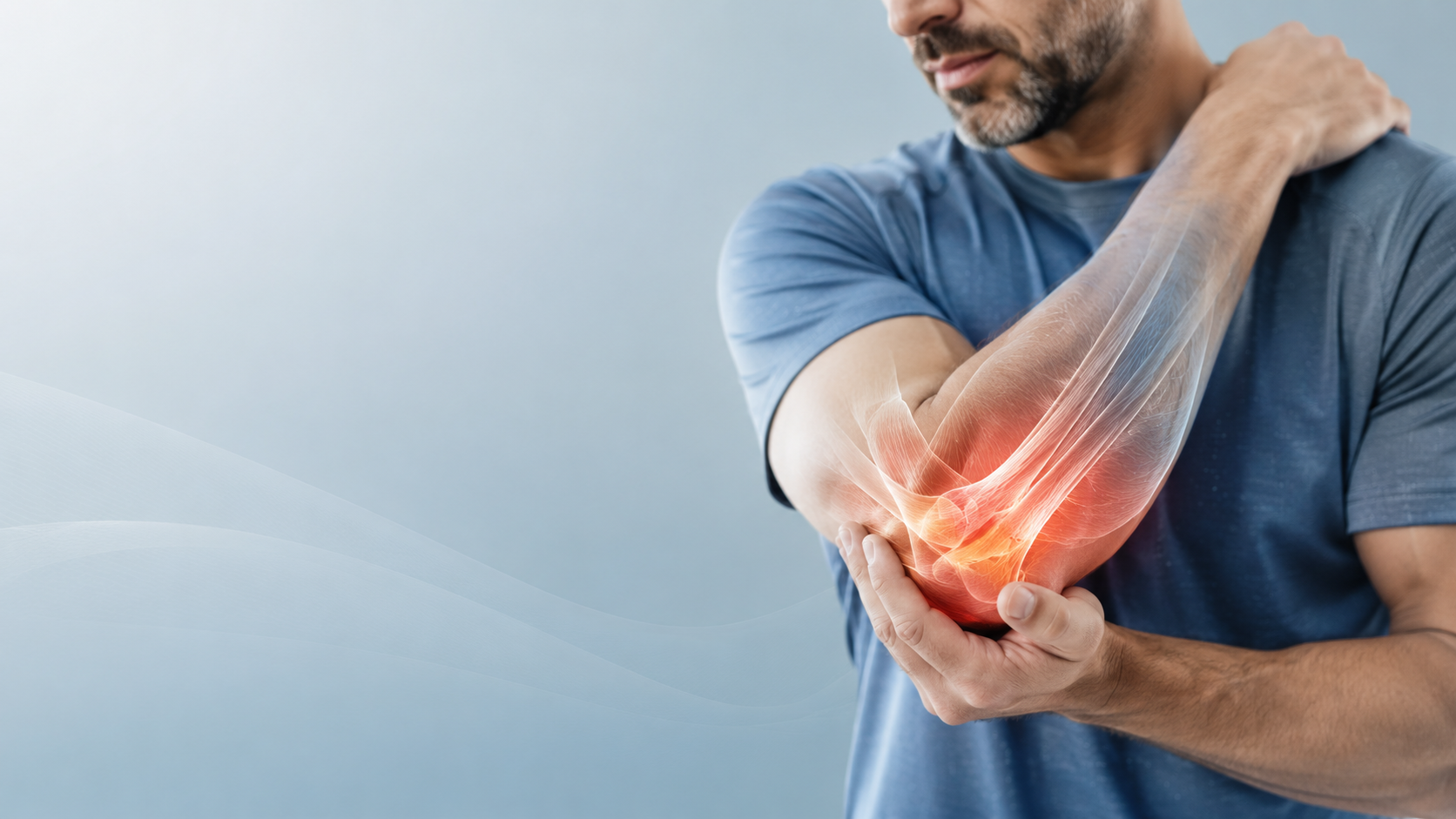
We aren’t making any claims in this article; we are simply sharing research.
Could red light therapy be a helpful addition to tendonitis treatment? Growing research suggests that photobiomodulation (PBMT) may help support the body's natural healing process by reducing inflammation, easing pain, and promoting tissue repair, making it an increasingly studied approach for tendon-related injuries.
Tendonitis is one of the most common musculoskeletal conditions, affecting people of all ages and activity levels. The term tendonitis refers to inflammation of a tendon, the strong band of connective tissue that attaches muscle to bone. It can develop in virtually any tendon throughout the body but is especially common in the biceps tendon, elbow (often called tennis elbow or golfer's elbow), patellar tendon (jumper's knee), Achilles tendon, and the rotator cuff tendons of the shoulder.
Whether caused by repetitive motion, overuse, sports, or everyday activities, tendonitis can lead to pain, stiffness, and reduced mobility. Fortunately, researchers are continuing to investigate how red and near-infrared light therapy may help support tendon healing at the cellular level, offering a promising, non-invasive option alongside conventional treatment approaches. (1)
Tendonitis doesn't only affect older adults. In fact, it is especially common among athletes, active individuals, and anyone who performs repetitive movements at work or during exercise. If you've ever experienced persistent pain in your knee, shoulder, elbow, or Achilles tendon after training or overuse, there's a good chance a tendon was involved.
While age-related joint conditions often develop later in life, tendon injuries frequently occur much earlier as a result of repetitive strain, overtraining, or excessive workload placed on the tissue. Because tendons have a relatively limited blood supply, they often heal more slowly than other tissues, making recovery both challenging and frustrating. (1)
With that in mind, let's explore what current research says about red light therapy for tendonitis and how photobiomodulation may support tendon healing and recovery.
What Does the Science Reveal About PBMT and Tendon Healing?
After understanding how tendon injuries develop, it's natural to wonder whether there's a way to help tendons heal more effectively. This question has led researchers around the world to investigate photobiomodulation therapy (PBMT). By studying how red and near-infrared light interact with injured tendon tissue, scientists have uncovered growing evidence that PBMT may help regulate inflammation, support collagen remodeling, reduce pain, and encourage the body's natural healing response. Although researchers are still refining treatment protocols, the findings to date have been encouraging. Here's what some of the latest studies have shown.
One recent 2025 study explored whether photobiomodulation (PBMT) could help improve tendon healing in an animal model of tendinopathy. Researchers investigated whether light therapy could reduce pain while also supporting the body's natural repair process within the injured tendon. Their findings were encouraging, suggesting that PBMT influenced several key biological processes involved in tendon recovery.
"PBM emerged as an effective treatment for TP, as it not only alleviated pain symptoms but also modulated collagen expression and reduced astrocyte and IL-1β expression." (2)
Another study investigated whether LLLT could help regulate the body's inflammatory response following an Achilles tendon injury. Researchers found that light therapy influenced several important inflammatory signaling molecules, reducing those associated with prolonged inflammation while increasing others involved in the healing process. These findings suggest that PBMT may help create an environment more favorable for tendon repair.
"We conclude that LLLT is an important modulator of inflammatory cytokines release after injury in Achilles tendon." (3)
In another study, researchers examined whether LLLT could help reduce inflammation associated with Achilles tendon injuries. The results showed that photobiomodulation decreased several key inflammatory markers involved in tendon damage, supporting its potential as a therapy to help regulate inflammation during the healing process.
"The laser irradiation... was effective in the reduction of important pro-inflammatory markers such as IL-6 and TNF-α, becoming a promising tool for the treatment of tendon diseases." (4)
How Does Red Light Therapy Compare to Traditional Anti-Inflammatory Treatments?
The early research on photobiomodulation is certainly encouraging, but another important question naturally follows: How does it compare to the treatments most people already rely on? For tendon injuries, anti-inflammatory medications such as diclofenac and other NSAID's have long been among the most commonly prescribed options for managing pain and inflammation. While these medications can provide temporary symptom relief, they don't necessarily address the biological processes involved in tendon repair. This has led researchers to investigate whether PBMT might offer a different approach by not only helping regulate inflammation but also supporting the body's natural healing response. Several studies have compared photobiomodulation directly with commonly used anti-inflammatory medications, and the findings are worth exploring.
One study compared low-level laser therapy with a commonly used anti-inflammatory medication to see how each affected tendon inflammation. Researchers found that photobiomodulation reduced inflammation by influencing specific inflammatory pathways involved in tendon injury. The findings suggest that PBMT may offer a non-drug approach for helping manage tendon inflammation while avoiding some of the side effects commonly associated with long-term use of anti-inflammatory medications.
"As LLLT seems to act on inflammation through a selective inhibition of the COX-2 isoform in collagenase-induced tendinitis, LLLT may have potential to become a new and safer non-drug alternative to coxibs." (5)
In another study, researchers compared photobiomodulation with a commonly prescribed anti-inflammatory medication to evaluate their effects on injured Achilles tendons. While both treatments helped reduce certain signs of inflammation, PBMT influenced a broader range of inflammatory markers and was also associated with preserving the tendon's strength and elasticity. These findings suggest that PBMT may support both inflammation management and the tendon's natural healing process.
"We conclude that LLLT was able to reduce tendon inflammation and to preserve tendon resistance and elasticity." (6)
Another study compared PBMT at a wavelength of 810nm with the commonly prescribed anti-inflammatory medication diclofenac in an animal model of Achilles tendinitis. Researchers found that PBMT was associated with greater reductions in enzymes involved in tendon breakdown while also supporting the recovery of the tendon's mechanical strength and function. These findings suggest that light therapy using 810nm may help protect tendon tissue and support the healing process following injury.
"LLLT exhibits the best results in terms of MMPs reduction and mechanical properties recovery. Thus, LLLT looks to be a promising and consistent treatment for tendinopathies." (7)
This study is favorable because it highlights something beyond pain relief and inflammation. It suggests that 810nm PBMT may help preserve the structural integrity of the tendon itself, which is exactly what clinicians want during tendon healing.
Another study compared PBMT (at 810nm) with two commonly prescribed anti-inflammatory medications, diclofenac and dexamethasone, in an animal model of Achilles tendinitis. Researchers evaluated not only inflammation but also how well the injured tendon recovered over time. They found that PBMT reduced inflammation, helped preserve the normal structure of the tendon, and supported healthier tissue repair compared with the medication-treated groups.
"LLLT showed a significant superiority over commonly used anti-inflammatory pharmaceutical agents in acute collagenase-induced tendinitis." (8)
What Happens When Red Light Therapy Is Combined With Exercise?
The studies we've looked at so far suggest that photobiomodulation may compare favorably with commonly used anti-inflammatory medications in several aspects of tendon healing. But researchers didn't stop there. They also began asking a different question: What happens when PBMT is paired with one of the most effective treatments for tendon rehabilitation...exercise?
Exercise remains one of the cornerstones of tendon recovery, helping restore strength, improve tissue remodeling, and gradually return tendons to normal function. Rather than replacing exercise, researchers have investigated whether PBMT might enhance its effects by creating a more favorable environment for healing. The results have been encouraging and suggest that these two approaches may work remarkably well together.
While several studies have compared photobiomodulation with anti-inflammatory medications, researchers have also begun exploring how PBMT may work alongside one of the most important treatments for tendon injuries: exercise. Since progressive exercise is widely recognized as a key component of tendon rehabilitation, scientists are investigating whether combining it with PBMT could further support tendon healing and recovery.
One animal study examined the effects of combining PBMT with aerobic exercise during Achilles tendon healing. Researchers found that the combination produced greater improvements in tendon strength, collagen organization, and tissue remodeling than either treatment alone, suggesting that PBMT may complement exercise by enhancing the body's natural repair processes.
"Our results suggest a beneficial interaction of combining both treatment strategies, i.e., aerobic exercise and LPBM, on the biomechanical properties, tissue morphology and the expression of matrix molecules in diabetic tendons." (9)
Why Photobiomodulation May Support Tendon Healing
The research we've explored so far paints a promising picture, but an important question remains: Why does photobiomodulation appear to help injured tendons heal?
The answer begins with one of the biggest challenges in tendon recovery. Unlike muscles, tendons receive relatively little blood flow, which means oxygen, nutrients, and healing cells reach the injured tissue more slowly. This limited circulation is one reason tendon injuries often take weeks or even months to recover.
One of the earliest and most important steps in healing is angiogenesis, the formation of new blood vessels. As new vessels develop around an injured tendon, they help deliver the oxygen and nutrients needed to fuel tissue repair. Researchers believe this process is especially important during the early stages of recovery, when the body is working to rebuild damaged tissue.
Photobiomodulation may help support this process in several ways. By stimulating the mitochondria, PBMT increases the production of ATP, the energy that cells rely on to repair and regenerate tissue (10). This increase in cellular energy has been associated with several biological responses that are important for tendon healing, including:
- Supporting angiogenesis by stimulating growth factors such as vascular endothelial growth factor (VEGF), which encourages the formation of new blood vessels.
- Promoting collagen production and organization by activating fibroblasts, the cells responsible for building and remodeling tendon tissue.
- Helping regulate inflammation, which may reduce pain and swelling while creating a more favorable environment for healing.
Together, these effects may help explain why so many studies have observed improvements in tendon structure, strength, and function following photobiomodulation. Rather than simply masking symptoms, PBMT appears to support many of the natural biological processes involved in tendon repair.
Supporting this idea, a 2021 review highlighted the critical role that angiogenesis, the formation of new blood vessels, plays in tendon healing. Researchers explained that newly formed blood vessels are essential for delivering oxygen and nutrients to injured tissue, removing cellular waste products, and helping regulate the body's immune response during the healing process. The review also emphasized the importance of vascular endothelial growth factor (VEGF), one of the body's primary signaling proteins responsible for promoting new blood vessel formation during tendon repair.
"Angiogenesis is crucial to facilitate tendon healing, such as delivering oxygen and nutrients, removing waste products, and controlling immune responses." (11)
One of the ways photobiomodulation may support tendon healing is by stimulating the production of VEGF, which encourages the formation of these new blood vessels (12). By improving circulation to injured tendon tissue, PBMT may help supply the oxygen and nutrients needed for repair while supporting collagen production and tissue remodeling.
Supporting these concepts, another study investigated whether photobiomodulation could stimulate angiogenesis following a partial Achilles tendon injury. Researchers evaluated the formation of new blood vessels during the early stages of healing and found that laser therapy increased blood vessel growth compared with untreated tendons. Because tendons naturally receive a limited blood supply, these findings suggest that PBMT may help create a more favorable environment for healing by improving the delivery of oxygen, nutrients, and other essential components needed for tissue repair.
"LLLT of different intensities seems to promote neovascularization in damaged Achilles tendons of rats after partial rupture compared to controls." (13)
Conclusion: Is Red Light Therapy Worth Trying for Tendonitis?
Based on the current body of research, photobiomodulation appears to be a promising option for supporting tendon healing, particularly when used as part of a comprehensive treatment plan. Studies have consistently shown that PBMT may help regulate inflammation, reduce oxidative stress, promote angiogenesis, stimulate collagen production, and support the structural remodeling of injured tendons. Several animal studies have even demonstrated improvements in tendon strength, organization, and healing, while emerging human research continues to build on these encouraging findings.
So, is low-level light therapy worth trying? Based on the evidence available today, the answer appears to be yes. When used appropriately, PBMT is a non-invasive therapy with a strong safety profile and growing scientific support.
As researchers continue to uncover how light influences cellular repair, inflammation, blood vessel formation, and collagen remodeling, photobiomodulation is becoming an increasingly important tool in the field of tendon rehabilitation. The future of tendon care lies in a deeper understanding of the body's natural healing processes and therapies designed to support the body's remarkable ability to heal.