Red Light Therapy for Fibromyalgia: Promising Pain Relief and Broader Benefits

We aren’t making any claims in this article; we are simply sharing research.
Let’s discuss Fibromyalgia. This topic is particularly compelling due to the promising research that has emerged over the years.
In Summary:
Is red light therapy beneficial for fibromyalgia? Current research findings are highly encouraging. However, it’s important to first take a step back and examine the fundamental nature of fibromyalgia.
Fibromyalgia is a chronic disorder marked by widespread pain, fatigue, stiffness, sleep disturbances, anxiety, and depression. The pain occurs throughout the body and at specific tender points. It is estimated to affect up to 5% of the global population, with women comprising the majority of cases. While the exact cause remains unknown, researchers believe it may involve a combination of peripheral nervous system sensitization, chronic inflammation, immune system activity, genetic predisposition, and lifestyle factors.
In relation to lifestyle factors, interventions such as dietary changes, natural supplements, sleep optimization, and other supportive strategies may offer benefits. Prescription medications are also commonly utilized in the management of fibromyalgia.
Encouragingly, research suggests that red light therapy may offer a wide range of benefits for individuals with fibromyalgia. Studies have reported reductions in pain, stiffness, anxiety, depression, and sleep disturbances, along with improvements in joint function, range of motion, and overall quality of life.
Currently, no single treatment protocol has been universally established, but full-body red light therapy appears to show the most promise. Additionally, targeted high-powered red light therapy applied directly to areas of fibromyalgia-related pain may offer further benefit.
Combining red light therapy with additional strategies—such as exercise within individual tolerance, appropriate medications, and cognitive behavioral therapy—appears to offer the most effective outcomes. Therefore, red light therapy should be viewed as one component of a broader, multidisciplinary approach.
In studies involving full-body red light therapy, treatments are most commonly administered twice per week. However, adjustments to this frequency may be appropriate based on individual response, and outcomes should be monitored to determine what is most effective on a case-by-case basis. Overall, the outlook for individuals with fibromyalgia continues to improve, not only through the potential of red light therapy but also through advancements in treatment options and a growing scientific understanding of the condition.
Fibromyalgia: Understanding Causes, Symptoms, and Treatment Approaches
The following section examines recent scientific reviews on fibromyalgia. These reviews synthesize and evaluate findings from earlier studies on the condition. For this analysis, reviews published within the past five years were selected (1; 2; 3; 4; 5; 6; 7; 8; 9; 10; 11; 12; 13).
Learning about Fibromyalgia
A recent review provides a clear and comprehensive overview of the fundamental aspects of fibromyalgia:
"Fibromyalgia is a syndrome characterized by chronic widespread musculoskeletal pain, which may or may not be associated with muscleor joint stiffness, accompanied by other symptoms such as fatigue, sleep disturbances, anxiety, and depression. It is a highly prevalent condition globally, being considered the third most common musculoskeletal disorder, following lower back pain and osteoarthritis. It is more prevalent in women than in men, and although it can occur at any age, it is more common between the ages of thirty and thirty-five. Although the pathophysiology and etiopathogenesis remain largely unknown, three underlying processes in fibromyalgia have been investigated. These include central sensitization, associated with an increase in the release of both excitatory and inhibitory neurotransmitters; peripheral sensitization, involving alterations in peripheral nociceptor signaling; and inflammatory and immune mechanisms that develop concurrently with the aforementioned processes. Furthermore, it has been determined that genetic, endocrine, psychological, and sleep disorders may influence the development of this pathology." (1).
It is important to note that in cases of lower back pain, a specific cause or identifiable physiological disturbance is not always present.
Diagnosis and Treatment of Fibromyalgia
Pain remains a central feature of fibromyalgia, with nervous system sensitization playing a significant role. However, the condition is complex, and no single treatment has been identified as universally optimal (1). A broad-spectrum approach is generally considered most effective, with red light therapy recommended as one potential component within a larger therapeutic framework.
Exercise, along with manual or physical therapy, has been shown to provide benefits (1). Pharmacological treatments may also be effective, though they can carry potential drawbacks (2). Ultimately, there is no straightforward or universally applicable solution. Notably, fibromyalgia itself has, at times, been questioned as a valid medical diagnosis (2), reflecting the ongoing complexity and debate surrounding the condition.
Despite these complexities, the following summarizes what researchers have reported on the topic:
"The syndrome’s impact on quality of life is profound, affecting daily activities, sleep, cognitive function, and social interactions. Diagnosis has evolved from reliance on tender points to a more comprehensive assessment, emphasizing the widespread nature of pain and associated symptoms. The risk factors, including gender predominance, genetic predisposition, and comorbid conditions, contribute to the complexity of fibromyalgia." (14)
Exercise, physical activity, stress management, and improved sleep hygiene have all been shown to influence fibromyalgia symptoms (3; 5; 14). Psychological interventions, including Cognitive Behavioral Therapy (CBT), may also provide benefit (14). Evidence suggests that a combination of multiple therapeutic approaches often yields the most favorable outcomes (4; 5).
More broadly, fibromyalgia and its associated symptoms are influenced by a wide range of factors (6), including exposure to air pollutants, electromagnetic fields (EMFs), past trauma (particularly in childhood), infections, and psychological stress.
Understanding the Impact of Fibromyalgia
Fibromyalgia is not a rare condition, affecting up to approximately 5% of the global population (7). An estimated 80–96% of those diagnosed are women (7).
Diagnosis commonly occurs in individuals in their 30s, though it is often delayed due to symptom overlap with other medical conditions.
Chronic pain associated with fibromyalgia has been linked to an increased risk of mood and sleep disorders (15). The combined effects of persistent pain and disrupted sleep may also contribute to cognitive impairments over time. Additionally, there is a documented association between fibromyalgia and conditions such as anxiety and depression—an understandable correlation given the ongoing nature of the pain (16). In many cases, fibromyalgia can result in reduced work activity or even the inability to participate in the labor force (17).
Advancements in Fibromyalgia Treatment Approaches
Here’s some good news…The decentralized web enables individuals with fibromyalgia to connect and share experiences related to symptom management and treatment strategies.
According to a 2023 review, researchers highlighted these developments with a renewed focus on:
"the role of inflammation, gut dysbiosis, and neuroinflammation, and possible treatment options, including medications such as antioxidants and kinin antagonists, neurostimulation, and mind-body interventions. Although ketamine, vitamin D, and hormone therapy have shown promise in reducing [Fibromyalgia] symptoms, further research is needed to optimize their use. Neurostimulation techniques, such as transcutaneouselectrical nerve stimulation, transcranial direct-current stimulation and transcranial magnetic stimulation, have been investigated in terms of their efficacy in reducing pain and improving the quality of life. Finally, the role of nutrition is discussed as study findings suggest that weight control, modified high-antioxidant diets, and nutritional supplementation can help to alleviate the symptoms of [Fibromyalgia]." (9)
The 2024 update of that review offers a more in-depth examination of the physiological mechanisms underlying fibromyalgia (10), reflecting the rapid advancement of research in this area.
Nutrition and Supplement Strategies for Fibromyalgia
While not the primary focus of this article, it is worth exploring the role of nutrition and supplements in managing fibromyalgia (11; 12; 13). A recent review on this topic states:
"In total these studies investigated 17 different nutritional interventions. Significant improvements in reported pain were observed for those following a vegan diet, as well as with the low fermentable oligo di-monosaccharides and polyols (FODMAP) diets. Supplementation with Chlorella green algae, coenzyme Q10, acetyl-l-carnitine or a combination of vitamin C and E significantly improved measures of pain." (11)
Another review says:
"Various nutritional interventions, including vitamin D, magnesium, iron, and probiotics supplementation, have shown potential in reducing [Fibromyalgia] symptoms, such as chronic pain, anxiety, depression, cognitive dysfunction, sleep disturbances, and gastrointestinal issues. Additionally, weight loss has been associated with reduced inflammation and improved quality of life in FM patients. The review highlights the anti-inflammatory benefits of plant-based diets and the low-FODMAPs diet, which have shown promise in managing [Fibromyalgia] symptoms and related gastrointestinal disorders. Supplements such as vitamin D, magnesium, vitamin B12, coenzyme Q10, probiotics, omega-3 fatty acids, melatonin, S-adenosylmethionine, and acetyl-L-carnitine are discussed for their potential benefits in [Fibromyalgia] management through various mechanisms, including anti-inflammatory effects, modulation of neurotransmitters, and improvement of mitochondrial function." (12)
So, it seems as though you should do what works for you.
Adhering to a Standard American Diet (SAD) or a similar dietary pattern may help improve symptoms. Improving dietary habits can offer meaningful benefits, as lifestyle and nutrition often play a significant role in chronic conditions, particularly those not solely driven by genetics.
The next section will explore the fundamentals of red light therapy, followed by a discussion on its potential relevance as part of a fibromyalgia treatment approach.
What is Red Light Therapy?
As a quick overview, red and near-infrared light can penetrate the body to a depth of several inches, where it interacts with cells at the molecular level. This interaction may help reduce inflammation and oxidative stress, leading to increased cellular energy production. Since energy is the fundamental "currency" of the cell, enhanced energy availability can support a wide range of physiological processes.
For example, reported benefits of red light therapy include improvements in skin, nail, and hair health, enhanced blood circulation, increased energy levels, better sleep and night time recovery, improved athletic performance, and cognitive support. Additionally, research suggests potential benefits in the prevention and management of various chronic health conditions, including cardiovascular, metabolic (such as type II diabetes), and neurodegenerative disorders. Red light therapy may also influence pain reduction, wound healing, and other aspects of overall health.
Side effects from red light therapy are extremely rare, particularly when used as directed. It is important to follow manufacturer guidelines or consult resources on appropriate dosing. In basic terms, red and near-infrared light is applied to targeted tissue for a few minutes daily, supporting healing and overall health. While the underlying mechanisms are more complex and nuanced, this simplified explanation provides a useful starting point for general understanding.
The following section provides a detailed overview of red light therapy in the context of fibromyalgia highlighting its potential effects, limitations, and what individuals may realistically expect.
Key Benefits of Red Light Therapy for Fibromyalgia
Below is a summary of the studies into Fibromyalgia. A review of all available human research on light therapy for fibromyalgia reveals several reported benefits:
- Reduction in overall fibromyalgia symptoms
- Decreased pain, both general and at fibromyalgia-specific tender points
- Reduced tenderness and stiffness
- Lower levels of fatigue
- Fewer sleep disturbances
- Decreased symptoms of depression and anxiety
The studies utilize a wide range of wavelengths within the red and near-infrared light spectrum. Some also employ full-spectrum near-infrared light, spanning from approximately 780 nm to 1,400 nm. These investigations have yielded promising results.
Other studies have employed high-powered light therapy, often using lasers targeted at fibromyalgia-specific points on the body. These studies have reported promising outcomes, typically requiring higher energy doses—up to approximately 130 J/cm². In contrast, studies using much lower doses, such as 2 J/cm², generally do not demonstrate significant effects. A few studies have found no notable impact, often attributed to insufficient dosing.
Finally, some studies have combined light therapy with aerobic exercise, resulting in enhanced therapeutic effects. However, research utilizing lower dosages or suboptimal application methods often reports limited or no improvement. Overall, red light therapy shows considerable promise for fibromyalgia management, though further investigation is wanted.
Red Light Therapy and Fibromyalgia: What the Research Shows
Currently, there are 26 studies focused specifically on red light therapy for fibromyalgia, all of which involve human participants or are reviews based on prior human research (18). As a result, animal studies are not included in this analysis. The following sections will examine the most recent systematic reviews along with the individual human trials.
Human Studies
First, the human studies will be reviewed to assess the conclusions that can be drawn from the available data.
- One randomized controlled trial (RCT) utilized a high-intensity laser with a wavelength of 1,064 nm (19). The study reported improvements in several key measures, including the Revised Fibromyalgia Impact Questionnaire (RFIQ), overall pain intensity, tenderness at fibromyalgia-specific pressure points, and overall quality of life—indicating positive outcomes.
- A second randomized controlled trial (RCT) investigated the effects of 808 nm light (20). Participants were divided into four groups: placebo, aerobic exercise, light therapy, and a combination of light therapy with aerobic exercise. All groups showed improvements in pain and quality of life. The light therapy was administered locally, although the exact dosing parameters are not clearly defined. The intervention consisted of two sessions per week over a 12-week period.
- Another study examined whole-body light therapy (21; 22). The outcomes were qualitative in nature, focusing on the participants' personal experiences (22). The system emits light at wavelengths of 660 nm and 850 nm. Reported results from the study were notably positive, with participants describing substantial improvements. The following examples highlight some of these outcomes, beginning with reductions in pain (22).

And on mood (22):
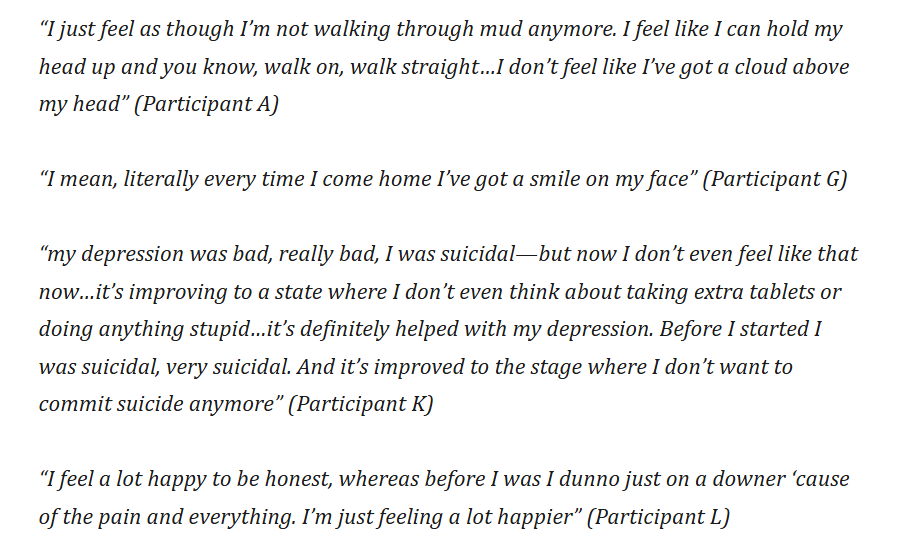
Here’s what was said about sleep quality (22):

Another RCT utilized light at wavelengths of 630, 850, and 905 nm (23). Treatments were administered three times per week over a three-week period, with light applied to an area of approximately 30 cm² (roughly 12 square inches). The study reported the following outcome:
"A decrease in the degree-of-pain rating was observed in patients allocated to the PBMT-sMF group, decreasing the number of tender points when compared to placebo group at the end of treatment (P<0.0001) and at the follow-up assessment (P<0.0001). Patients did not report any adverse events." (23)
However, the study also incorporated a static magnetic field alongside red light therapy, making it difficult to attribute the observed effects solely to the light treatment.
Then, another study RCT using a device at 660 nm and 850 nm (24). Here are the results from that study:
"Positive changes were observed for FM-specific quality of life, pain, tenderness, stiffness, fatigue, sleep disturbance, anxiety, depression and cognitive impairment. Patient global assessment revealed improvements at 6 weeks, with continued effect at 24 weeks. FM-specific quality of life at 24 weeks remained improved compared with baseline scores. " (24).
It is recommended to refer to Figure 6 in the full study text, which displays graphs illustrating the reduction in pain scores, stiffness, and related measures (25).
Another study employed a different dosing approach, utilizing near-infrared light combined with hyperthermia (induced overheating) for the treatment of fibromyalgia (26). Participants received six sessions over a two-week period. The fibromyalgia group reported improved pain conditions, with benefits still observed after 30 weeks.
Then, another 660nm and 850 nm wavelength (27). Quality of life as well as pain improved here.
You can see the amount of pain experienced over time in this study (28). The quality of life in the treatment group becomes much higher, and notice that the Y-axis that moves up and is more challenging to read.
Similarly, remarkable improvements were observed over time in areas such as leisure physical activity, kinesiophobia (the fear of movement due to anticipated pain), and self-efficacy. Notably, these outcomes were achieved with just twelve sessions of red light therapy, highlighting its potential impact.
Another study assessed additional outcomes in individuals with fibromyalgia, including daily fluctuations in blood pressure and related measures (29):
"Circadian variations in [blood pressure] showed significant differences after the [red light therapy] intervention (p = 0.036). When comparing [pain pressure threshold] between groups, statistically significant differences were found in the occiput (p = 0.039), low cervical (p= 0.035), trapezius (p = 0.037), second rib (p < 0.001) and medialepicondyle points (p = 0.006). Furthermore, there were statistically significant differences in both the trapezius and the forearm at the distal dorsal third SEL values (p ≤ 0.001) when comparing groups. Whole-body [red light therapy] produces changes in circadian blood pressure, the pain pressure threshold and the elasticity of tissue after a treatment program was carried out."
In this context, “circadian” refers to the body's roughly 24-hour day-night rhythm, which is primarily influenced by light exposure through the eyes and skin. However, from a statistical standpoint, the outcome of the related study was less significant than the quoted results might initially suggest.
Another study involving 840 nm light did not provide sufficient detail to reconstruct the treatment protocol (30). This study concluded that red light therapy did not improve muscle strength in individuals with fibromyalgia.
In a separate trial, 808 nm light was applied at a high dose of 132 J/cm² to fibromyalgia pressure points on the legs—though it is important to note that the treatment area was relatively small (31). Participants in both the red light and control groups followed an eight-week exercise program, but the addition of light therapy did not result in significant improvements.
A case study involving a single participant used a 1,275 nm laser on the spine, hip, and shoulder regions. A higher dose in this case was associated with substantial improvements (32).
Another study employed wavelengths of 640, 875, and 905 nm, evaluating both immediate effects and outcomes over a 10-week period (33). Light was applied to11 different body sites, with participants divided into various light therapy, exercise, and combined intervention groups. The study reported the following outcome:
"[Short term effects: pain threshold was improved with the phototherapy, and [exercise therapy] improved the pain threshold for temporomandibular joint (right and left body side) and occipital site (right body side). [Longer term effects]: there was improved pain threshold in several tender points with the phototherapy and [exercise therapy]. There was an overlap of therapies to reduce the tender point numbers, anxiety, depression, fatigue, sleep, and difficulty sleeping on [Fibromyalgia Impact Questionnaire(FIQ) and Research Diagnostic Criteria (RDC)] scores." (33)
A study utilizing 670 nm light applied as spot treatment at a high intensity of 670 mW/cm², delivering 4 J/cm² to 18 tender points, demonstrated notable improvements (34). The intervention consisted of twelve sessions over a four-week period, resulting in reduced pain and increased activity levels. The Revised Fibromyalgia Impact Questionnaire (FIQ) was used to assess outcomes (35).
Another study utilized infrared light ranging from 760 nm to 1,400 nm, incorporating both whole-body exposure and hyperthermia (36). The results indicated reductions in pain and improvements in mental health.
A separate study employed 810 nm and 980 nm wavelengths using a high-powered 10W laser at approximately 10 J/cm², leading to improvements in both pain and upper body flexibility. This protocol involved eight treatments over four weeks (37).
One additional study applied full-spectrum infrared light(780–1,400 nm) across the entire body (38). Participants were divided into control, once-per-week, and twice-per-week treatment groups. The once-weekly group experienced the most significant reductions in pain, improved quality of life, and decreased levels of depression.
A 905 nm study offered minimal detail on treatment parameters but reported slight improvements (39).
An 830 nm study administered treatments twice weekly for five weeks at a dose of 3 J/cm², targeting fibromyalgia tender points (40). This intervention showed no measurable effect. Notably, similar studies using higher doses at the same tender points have demonstrated more favorable outcomes, suggesting that the low 3 J/cm² dose may have been insufficient.
Another 780–1,400 nm study also combined light therapy with hyperthermia (41). Improvements were observed in overall pain, tender point sensitivity, and quality of life. The reported effect sizes were moderate, indicating a reasonably strong therapeutic impact.
In a separate 830 nm study, 2 J/cm² was applied to fibromyalgia tender points (42). Participants in the light therapy group showed improvement in overall condition, total pain, and scores on the Fibromyalgia Impact Questionnaire (FIQ). The treatment consisted of five sessions over a two-week period.
A study using 904 nm light compared the effects of light therapy to pharmacological treatment (43). Both interventions produced roughly equivalent outcomes.
Another 904 nm study applied 2 J/cm² at fibromyalgia tender points, resulting in improvements in muscle spasms, morning stiffness, pain, and tender point sensitivity (44).
Finally, a study using 830 nm light reported no significant effects from the intervention (45). While the study noted that 4.5–22.5 joules were applied to tender points, it did not specify whether this was in J/cm², making the dose difficult to interpret. This low or unclear dosing may have contributed to the lack of observed benefit.
Recent Review Studies
Only the most recent 3–5 systematic reviews are considered here, as they are more likely to reflect the latest available evidence. Many of the high-quality studies referenced above were published between 2022 and 2025, making up-to-date reviews particularly important given the rapid evolution of fibromyalgia research.
However, the most recent reviews specifically focused on light therapy for fibromyalgia date back to 2019 or earlier (46; 47; 48). As a result, they do not incorporate many of the newer studies. While all three reviews report positive findings, they also emphasize the need for further research. A major limitation identified in these reviews is the wide variation in treatment protocols—an issue also evident in the individual studies listed above (46; 47; 48).
Given these limitations, this section will exclude review data for now, as it does not reflect the most current or comprehensive evidence. Additionally, animal studies are not included, as fibromyalgia diagnosis and assessment rely in part on subjective symptom reporting, making human studies more relevant for evaluation.
How to avoid potential risks
The primary risk associated with red light therapy in this context is overuse. Another concern is failing to monitor treatment outcomes. For individuals with fibromyalgia, a gradual approach is likely necessary—particularly in the early stages, as suggested by the studies reviewed in this article.
Effective monitoring also involves avoiding multiple simultaneous lifestyle changes. Modifying nutrition, sleep habits, and starting red light therapy all at once can make it difficult to determine which intervention is responsible for any observed effects.
To optimize outcomes, implement one change at a time and observe the response. If a particular intervention proves beneficial, consider maintaining it as part of your routine and cautiously experiment with increased use. If increased use leads to diminished results, it may indicate that the intervention is being overapplied.
Conclusion: Embracing a New Era in Fibromyalgia Care
Is there anything that can help with fibromyalgia? Current evidence suggests that red light therapy shows significant potential. The most effective approaches appear to involve either high-intensity applications to fibromyalgia trigger points or full-body red light therapy. Among these, full-body treatments have demonstrated the most substantial results in many studies, though cost remains a barrier.
Red light therapy is emerging as one of the most promising alternative treatment options for fibromyalgia, and continued research in this area is likely to expand in the near future.